
.png)
With 2026 only a few days away, it is imperative to evaluate how much the Ethereum network has grown this year, from protocol upgrades to price movements and ecosystem expansion.
Although 2025 and this bull cycle were not entirely positive for Ether (ETH ($2,939.44)), the network recorded significant upgrades that optimized the user experience. There are multiple Ethereum Improvement Proposals (EIPs) in the works as developers continue to work together to scale the network.
The Good
At the start of the year, developers prepared for the release of the Pectra upgrade on the Ethereum mainnet. Following the mainnet deployment of Pectra in early May, Ethereum users gained support for larger validator stakes, account abstraction, protocol efficiency, and scalability enhancements. Hence, Pectra was one of Ethereum’s wins in 2025, as the upgrade marked one of the network’s largest in years and also a stepping stone to future developments.
After Pectra, developers focused on preparing for Fusaka and finally deployed the upgrade in early December. Fusaka focused on preserving Ethereum’s core features and delivering major scaling and data-efficiency improvements to the network. Amid the network upgrades and improvements, the second-largest crypto network also saw sustained stablecoin, decentralized finance (DeFi), and staking activity.
Ethereum recorded significant adoption among institutions and traditional finance entities. This year witnessed the rise of institutional investment vehicles and Ethereum Treasury companies, as billions of dollars flowed into the spot ETH exchange-traded funds (ETFs) market. Dozens of companies, including Nasdaq-listed firms, jumped on the trend of holding ETH on corporate balance sheets.
The Bad
Although regulatory clarity from U.S. and European Union frameworks has made institutional engagement more compliant and encouraged crypto adoption, Ethereum still faces some regulatory uncertainty. Authorities have yet to decide whether ETH is a security or a commodity.
While there is increased integration of digital rails for tokenized assets within the ecosystem, the Ethereum community is concerned that the network is usable only via layer-2 chains. Market experts feel there is a need to redirect developer focus back to the mainnet. There are also concerns about centralization due to the raised validator stake. Larger entities now dominate the staking scene, raising questions about the network’s decentralization.
The Ugly
Meanwhile, the growth recorded in the Ethereum network had no meaningful impact on ether’s price and value. Despite sustained demand from institutions and ETFs, the asset barely recorded any major price movements.
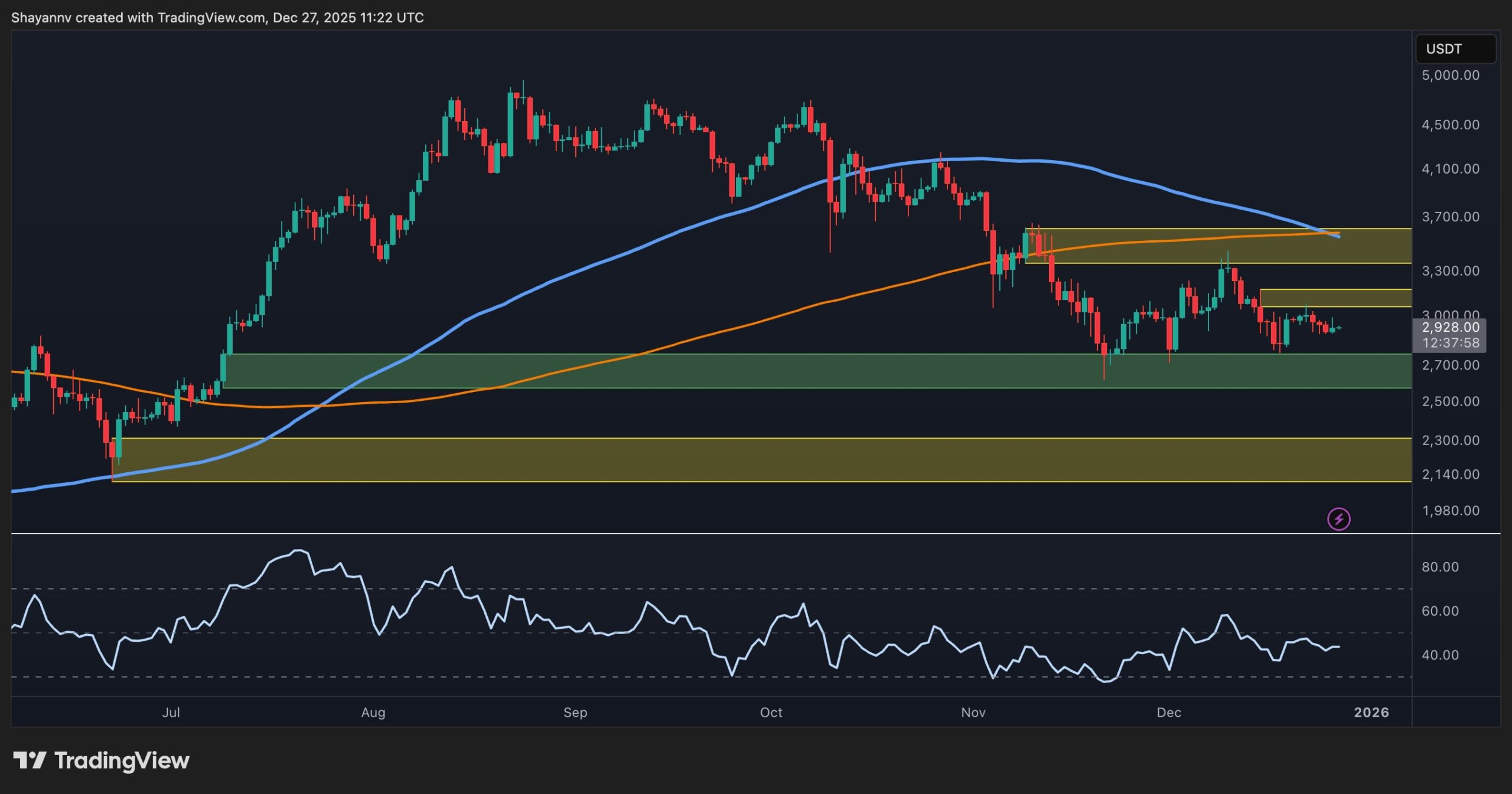
In fact, Ether’s current all-time high (ATH) is less than $100 more than the asset’s peak during the 2021 bull run. In November 2021, ETH hit an ATH of $4,878; this time, data from CoinMarketCap shows the coin’s August 2025 high sitting at $4,953. Since then, it has tumbled below $3,000, and it even plunged under $1,500 in April.
The poor price performance resulted in a loss of confidence in ETH among investors. The mismatch between network growth and prices has become hard for investors to ignore, prompting retail users to offload their assets, further depressing ether’s value. Investors are increasingly frustrated, and the narrative that ETH is losing its leadership momentum is prevailing.
The post Ethereum in 2025: The Good, the Bad, and the Ugly appeared first on CryptoPotato.

















 24h Most Popular




 Utilities